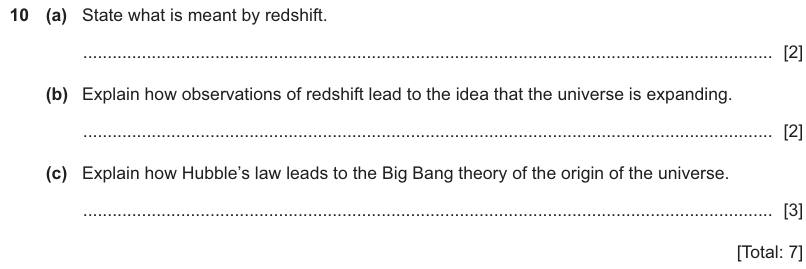
9702/4411 marks
Oct/Nov 2025 · Question 1
13.2 Gravitational force between point masses, 12.2 Centripetal acceleration, 12.1 Kinematics of uniform circular motion
13.2 Gravitational force between point masses12.2 Centripetal acceleration12.1 Kinematics of uniform circular motion
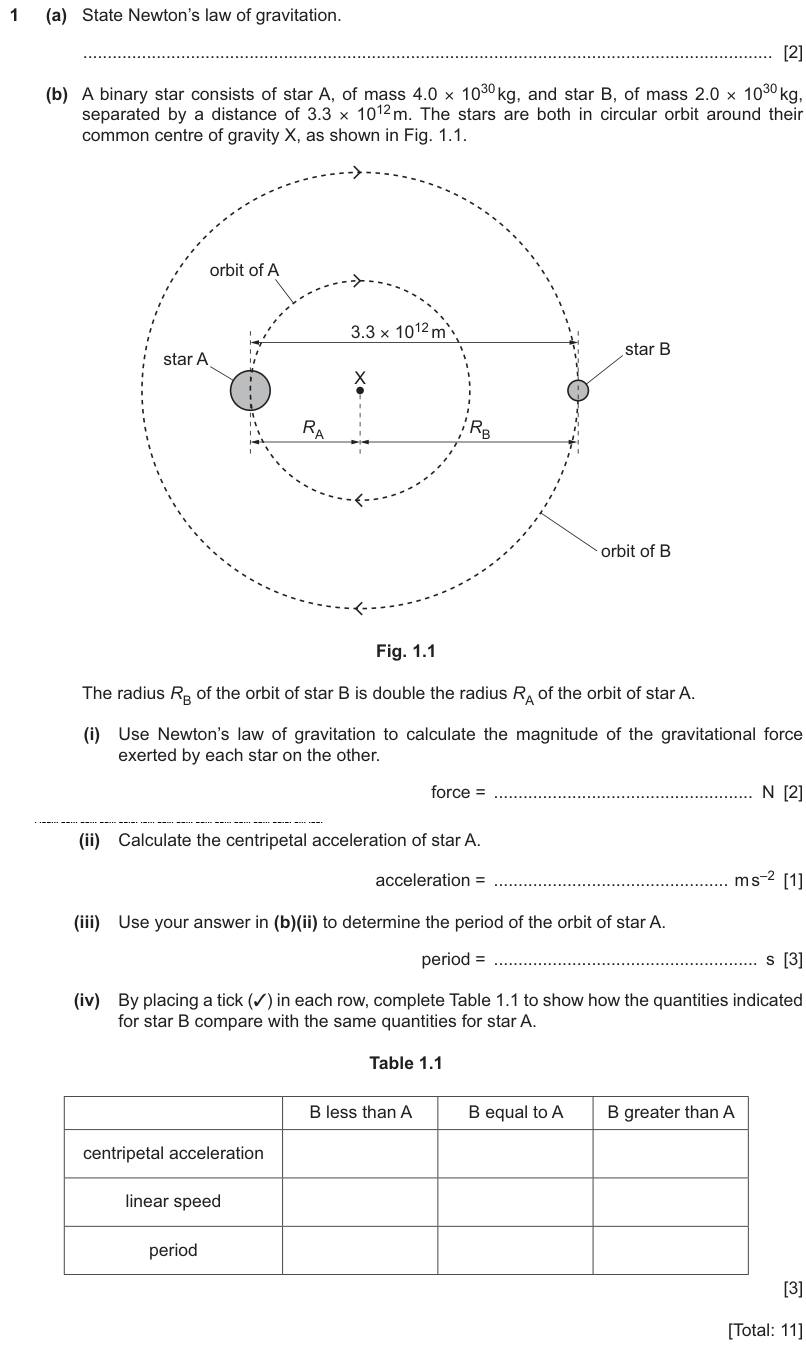
9702/447 marks
Oct/Nov 2025 · Question 2
15.2 Equation of state, 15.3 Kinetic theory of gases
15.2 Equation of state15.3 Kinetic theory of gases
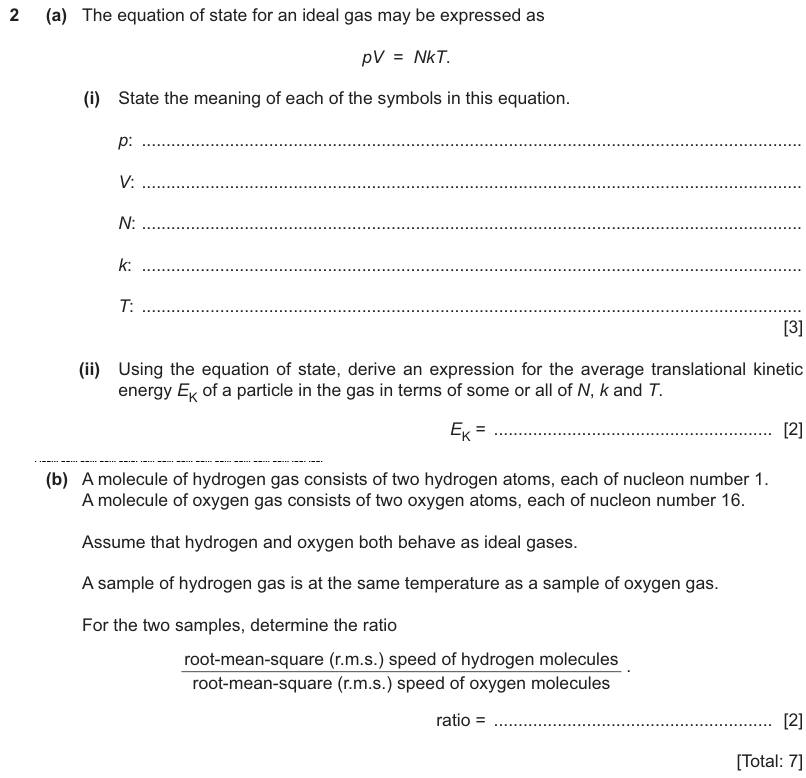
9702/449 marks
Oct/Nov 2025 · Question 3
15.2 Equation of state, 15.3 Kinetic theory of gases, 16.1 Internal energy
15.2 Equation of state15.3 Kinetic theory of gases16.1 Internal energy
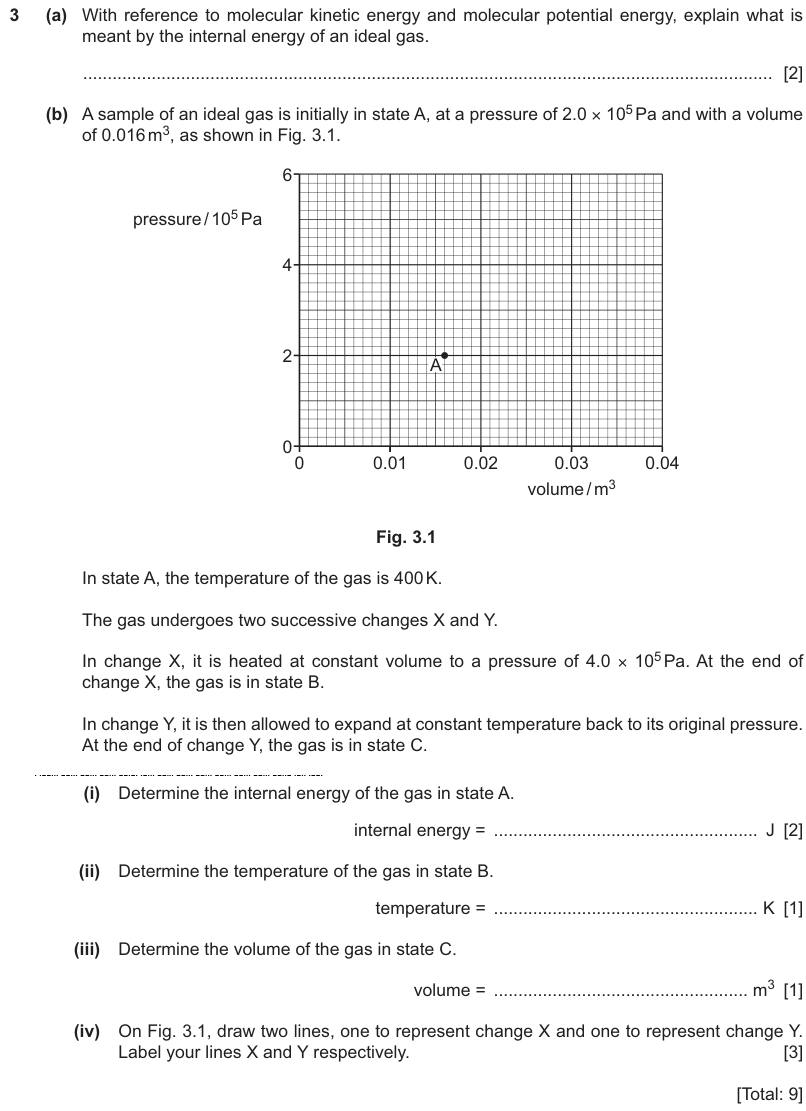
9702/4410 marks
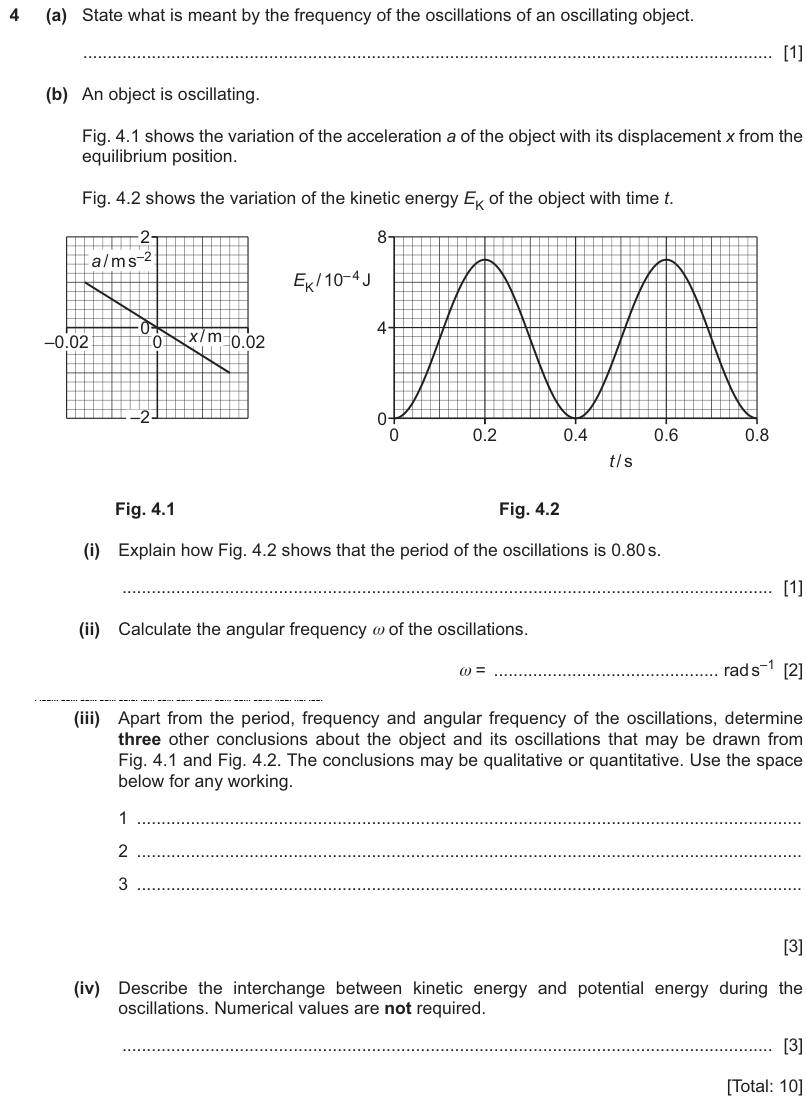
Oct/Nov 2025 · Question 4
17.1 Simple harmonic oscillations, 17.2 Energy in simple harmonic motion
17.1 Simple harmonic oscillations17.2 Energy in simple harmonic motion
9702/449 marks
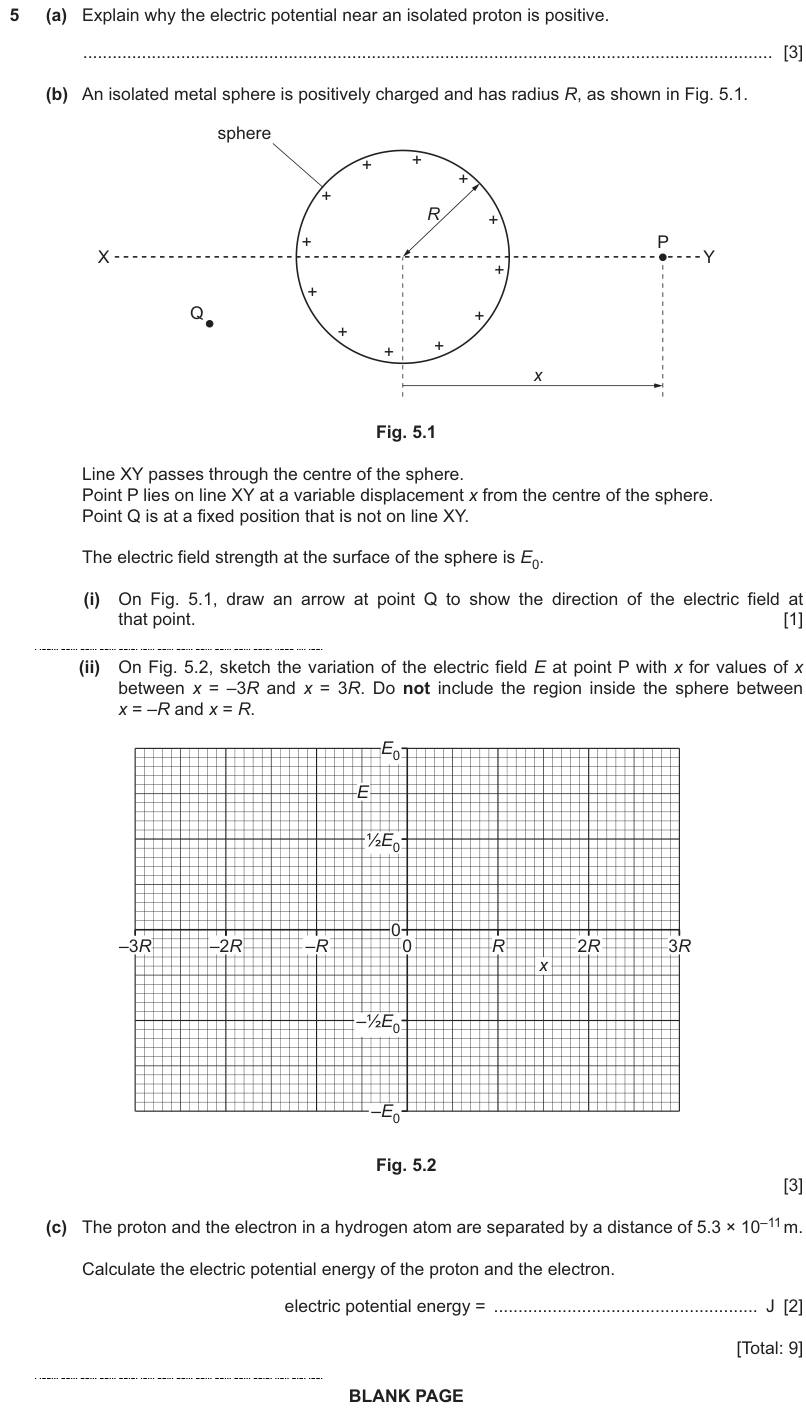
Oct/Nov 2025 · Question 5
18.5 Electric potential, 18.4 Electric field of a point charge
18.5 Electric potential18.4 Electric field of a point charge
9702/4415 marks
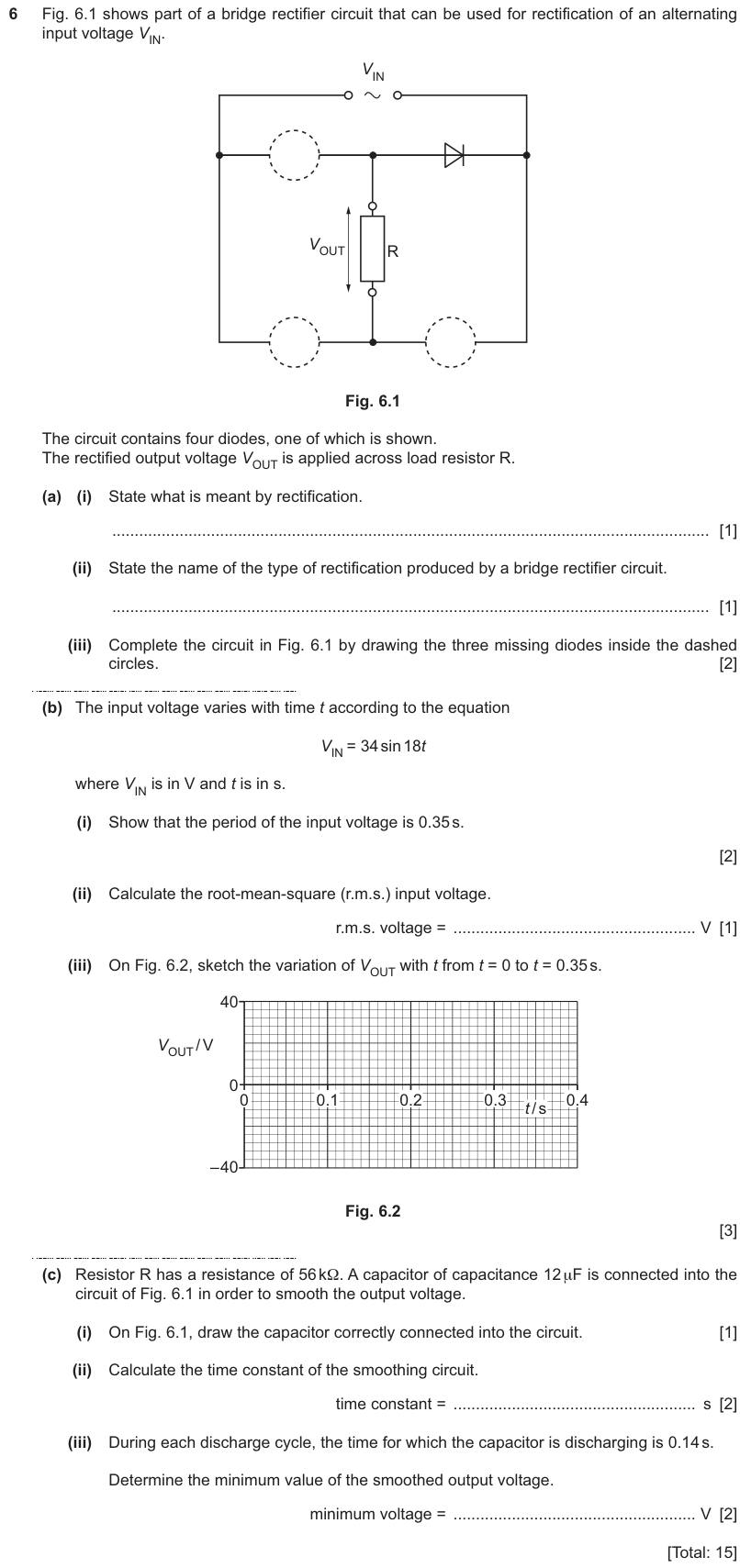
Oct/Nov 2025 · Question 6
21.2 Rectification and smoothing, 21.1 Characteristics of alternating currents, 19.3 Discharging a capacitor
21.2 Rectification and smoothing21.1 Characteristics of alternating currents19.3 Discharging a capacitor
9702/449 marks
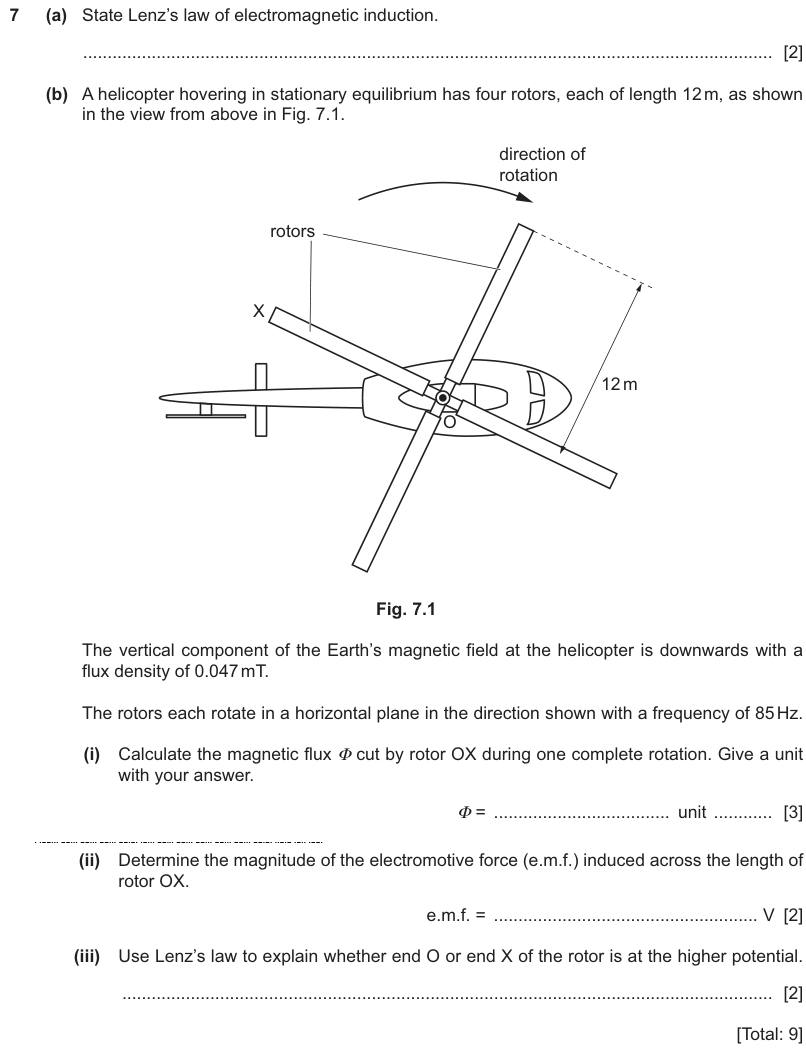
Oct/Nov 2025 · Question 7
20.5 Electromagnetic induction
20.5 Electromagnetic induction
9702/4415 marks
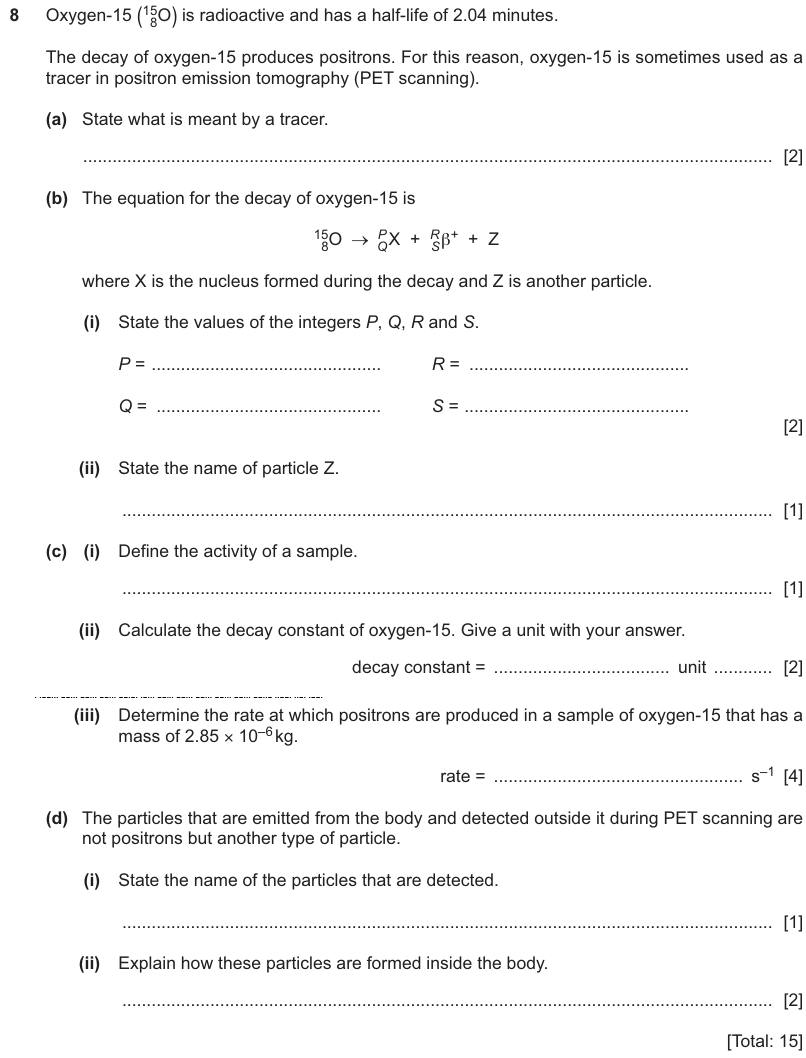
Oct/Nov 2025 · Question 8
23.2 Radioactive decay, 24.3 PET scanning
23.2 Radioactive decay24.3 PET scanning
9702/448 marks
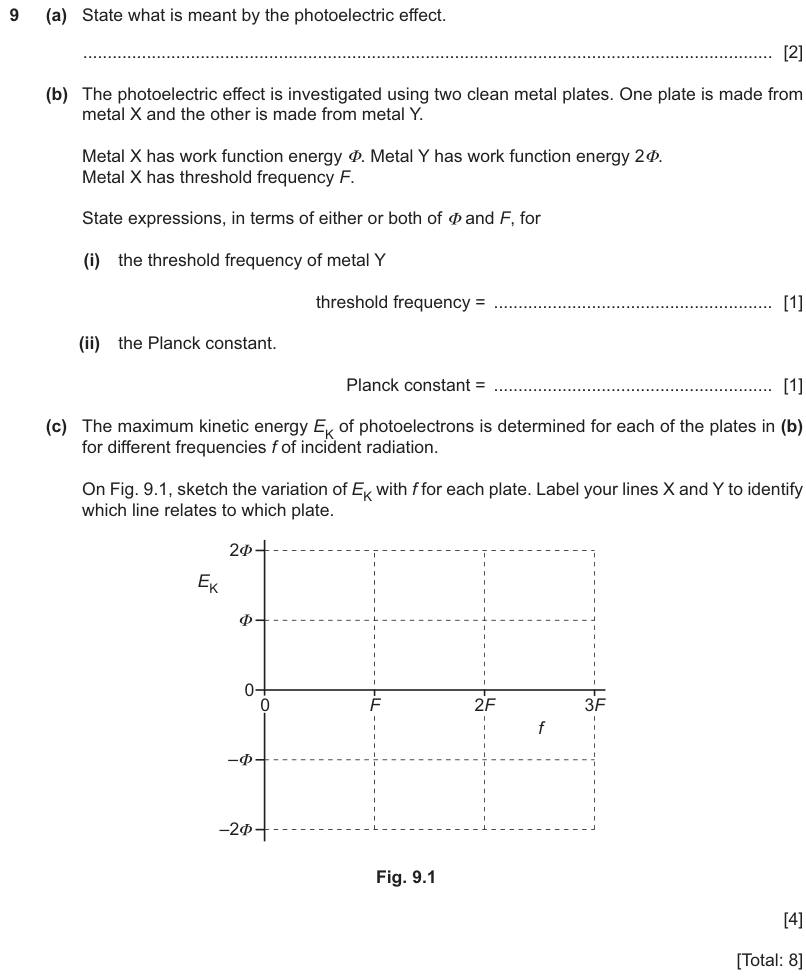
Oct/Nov 2025 · Question 9
22.2 Photoelectric effect
22.2 Photoelectric effect
9702/447 marks
Oct/Nov 2025 · Question 10
25.3 Hubble’s law and the Big Bang theory
25.3 Hubble’s law and the Big Bang theory