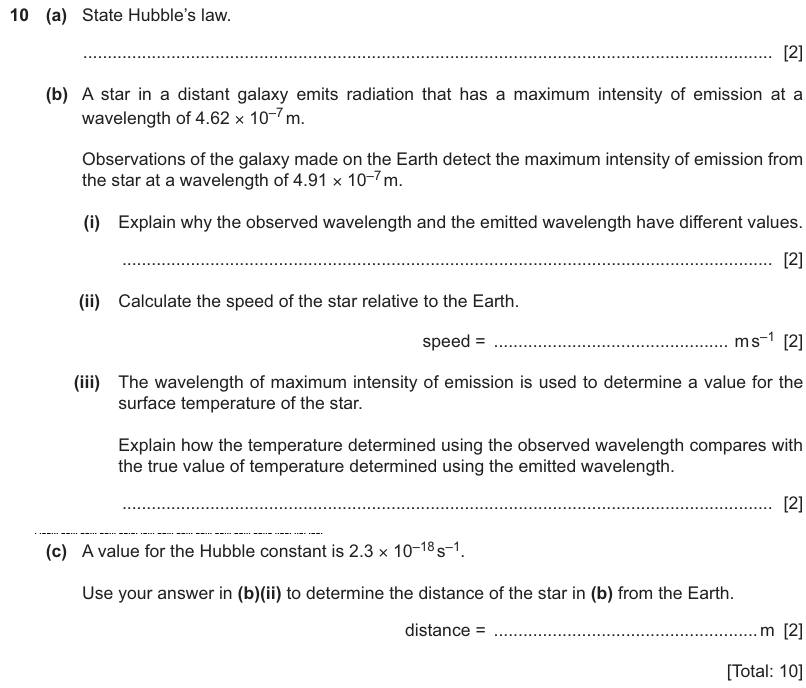
9702/439 marks
May/June 2025 · Question 1
13.4 Gravitational potential, 13.3 Gravitational field of a point mass, 12.1 Kinematics of uniform circular motion
13.4 Gravitational potential13.3 Gravitational field of a point mass12.1 Kinematics of uniform circular motion
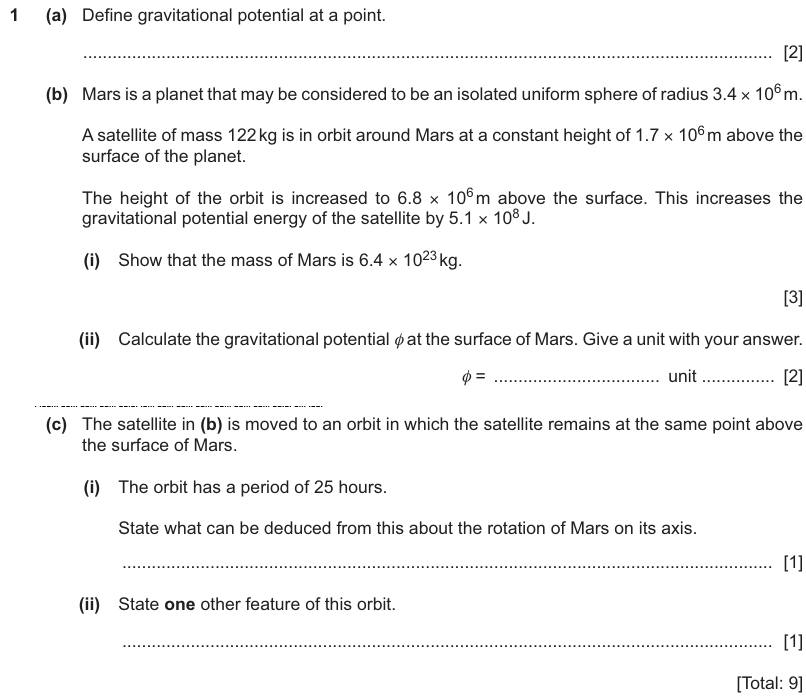
9702/4311 marks
May/June 2025 · Question 2
18.3 Electric force between point charges, 12.1 Kinematics of uniform circular motion, 18.4 Electric field of a point charge
18.3 Electric force between point charges12.1 Kinematics of uniform circular motion18.4 Electric field of a point charge
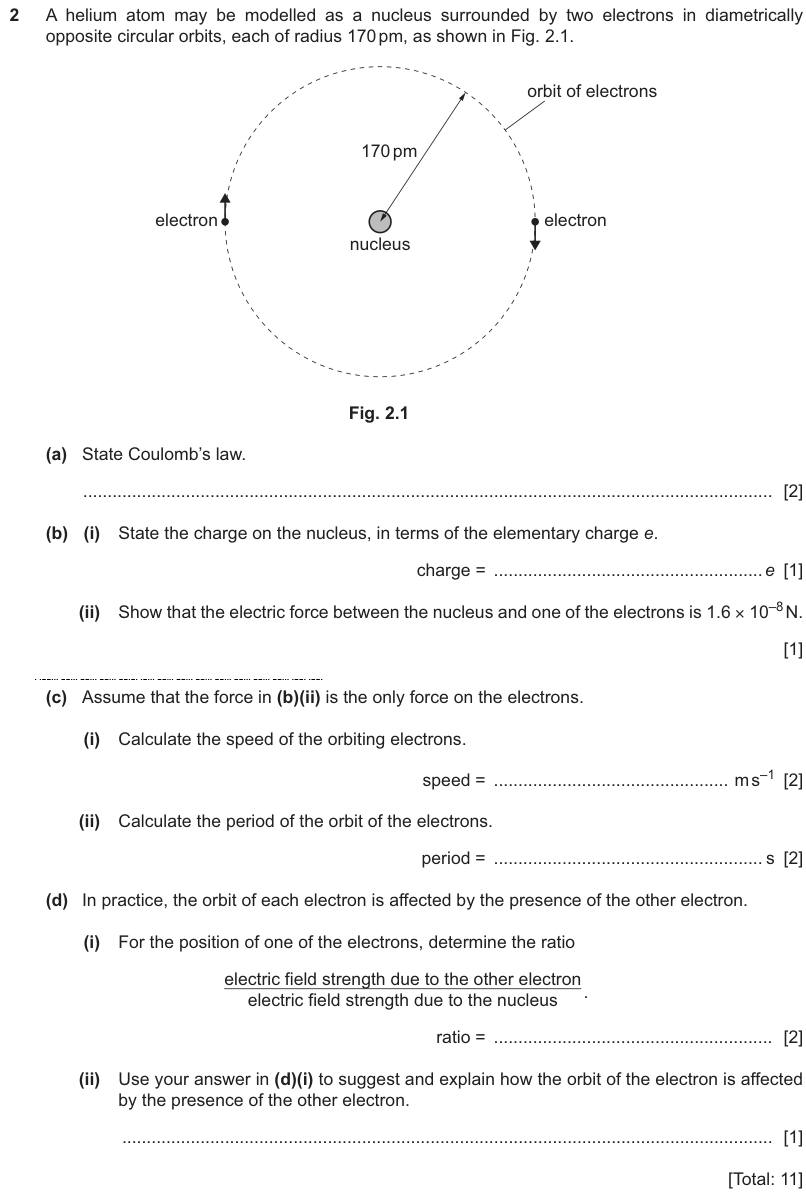
9702/439 marks
May/June 2025 · Question 3
14.3 Specific heat capacity and specific latent heat, 16.1 Internal energy
14.3 Specific heat capacity and specific latent heat16.1 Internal energy
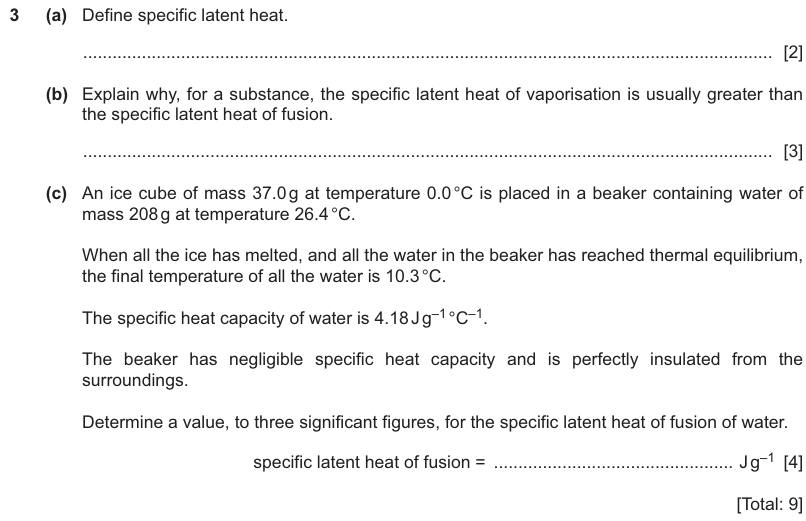
9702/438 marks
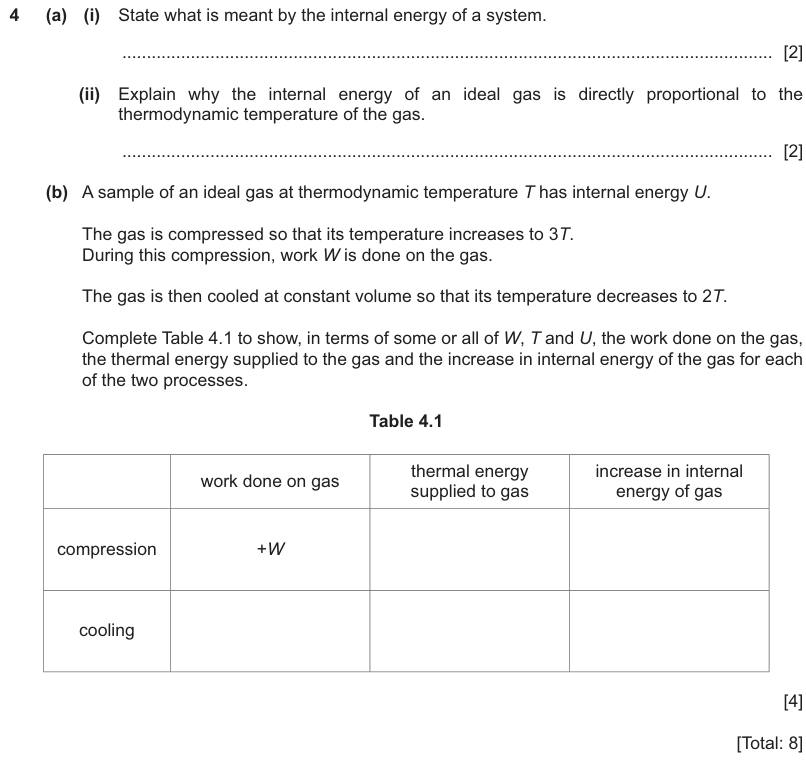
May/June 2025 · Question 4
16.1 Internal energy, 16.2 The first law of thermodynamics
16.1 Internal energy16.2 The first law of thermodynamics
9702/438 marks
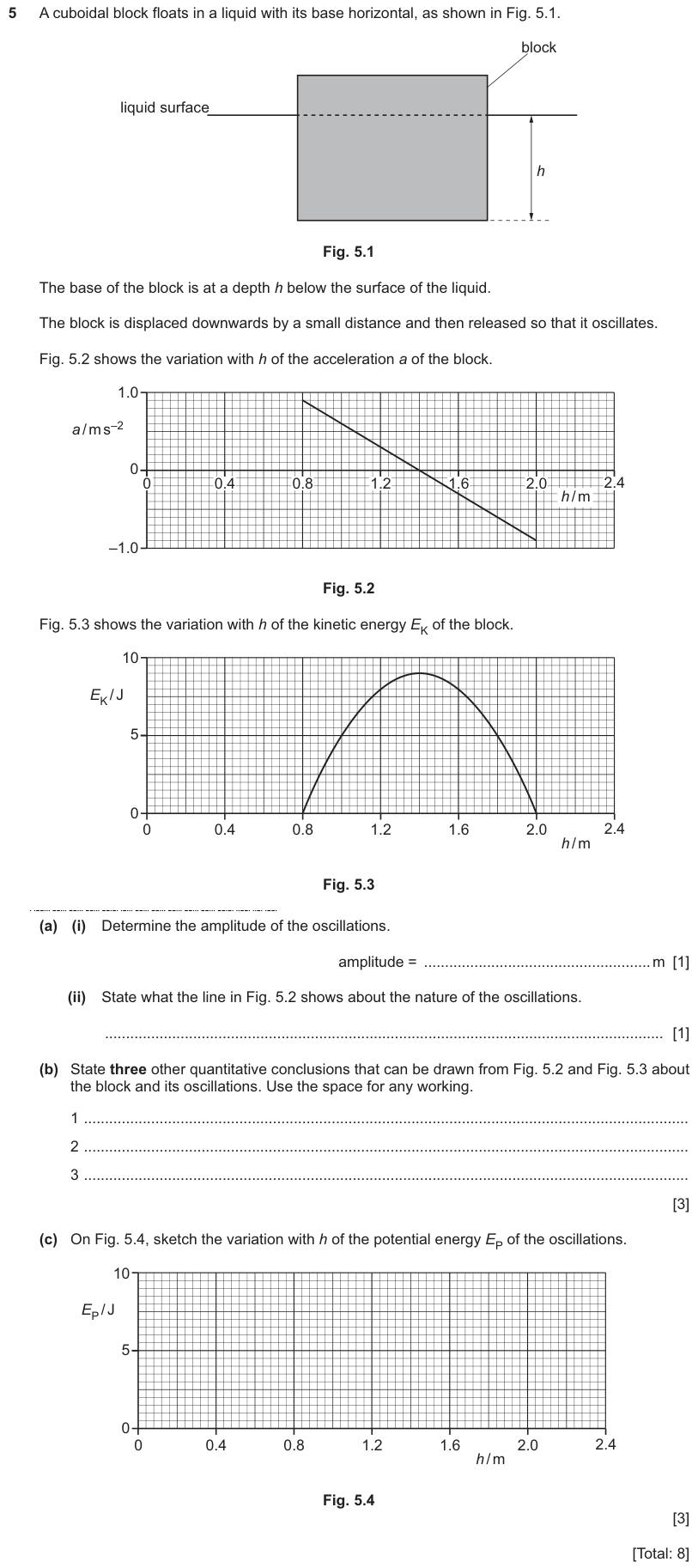
May/June 2025 · Question 5
17.1 Simple harmonic oscillations, 17.2 Energy in simple harmonic motion
17.1 Simple harmonic oscillations17.2 Energy in simple harmonic motion
9702/4312 marks
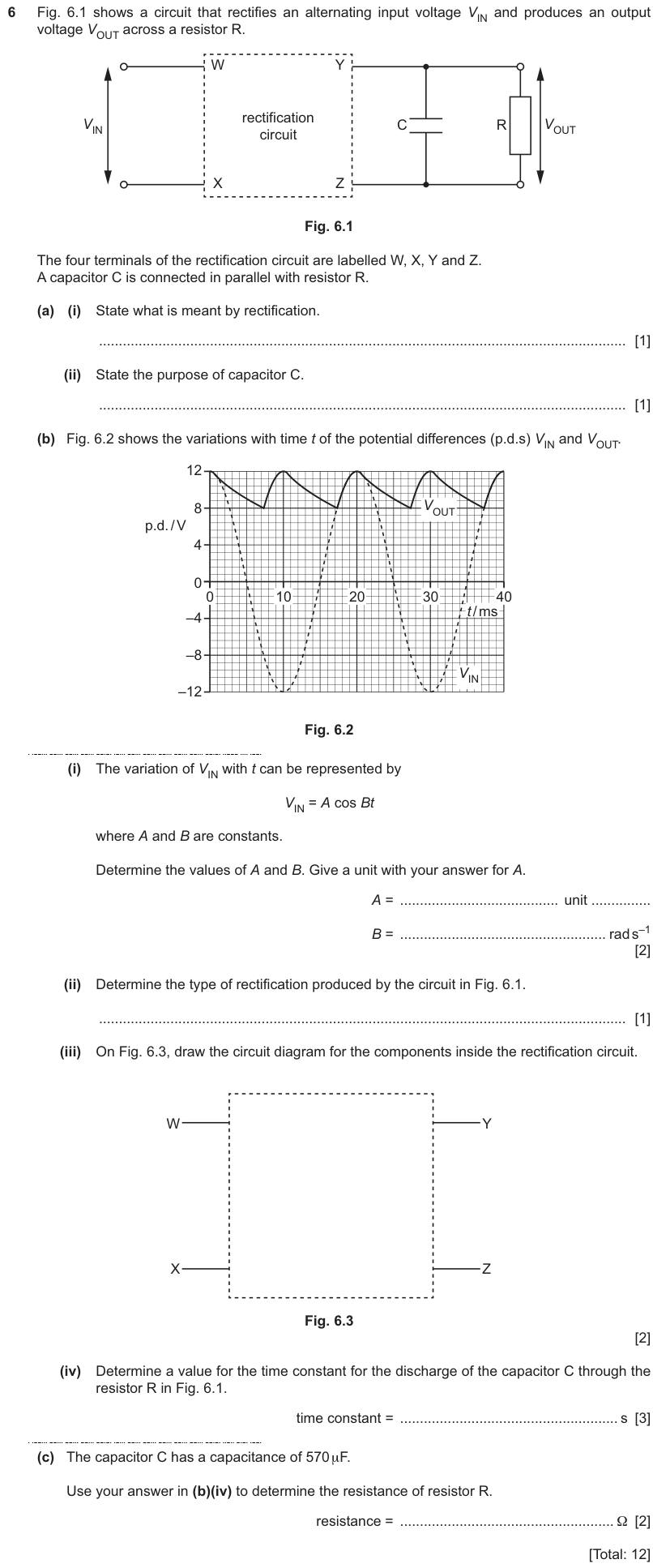
May/June 2025 · Question 6
21.2 Rectification and smoothing, 19.3 Discharging a capacitor
21.2 Rectification and smoothing19.3 Discharging a capacitor
9702/4310 marks
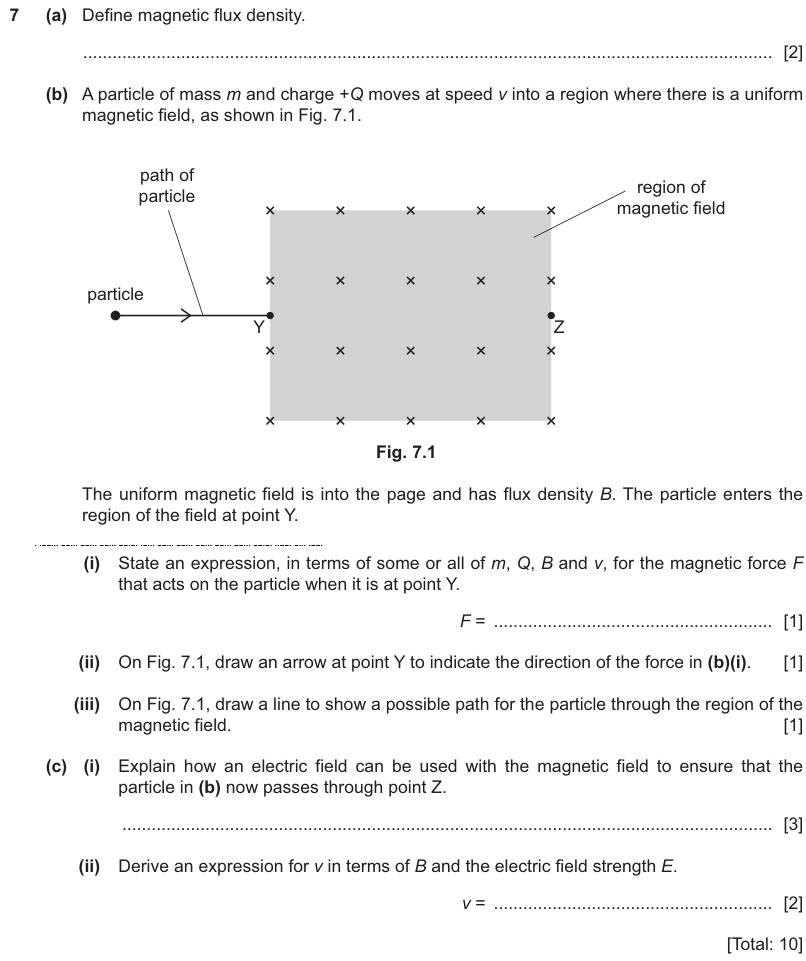
May/June 2025 · Question 7
20.3 Force on a moving charge, 20.1 Concept of a magnetic field
20.3 Force on a moving charge20.1 Concept of a magnetic field
9702/4313 marks
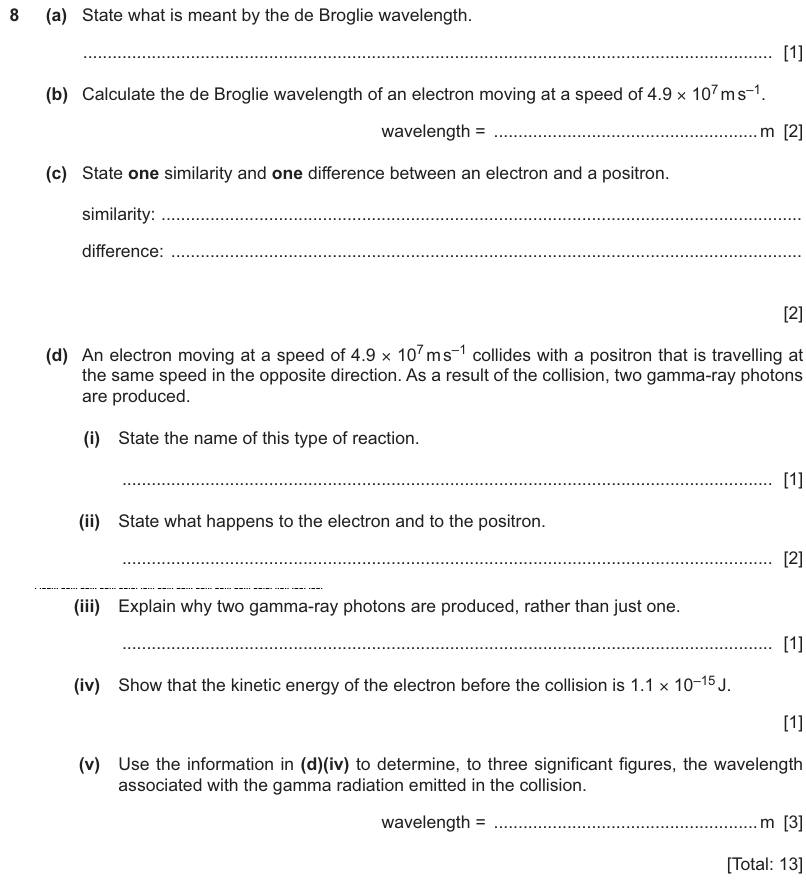
May/June 2025 · Question 8
22.3 Wave-particle duality, 11.2 Fundamental particles
22.3 Wave-particle duality11.2 Fundamental particles
9702/4310 marks
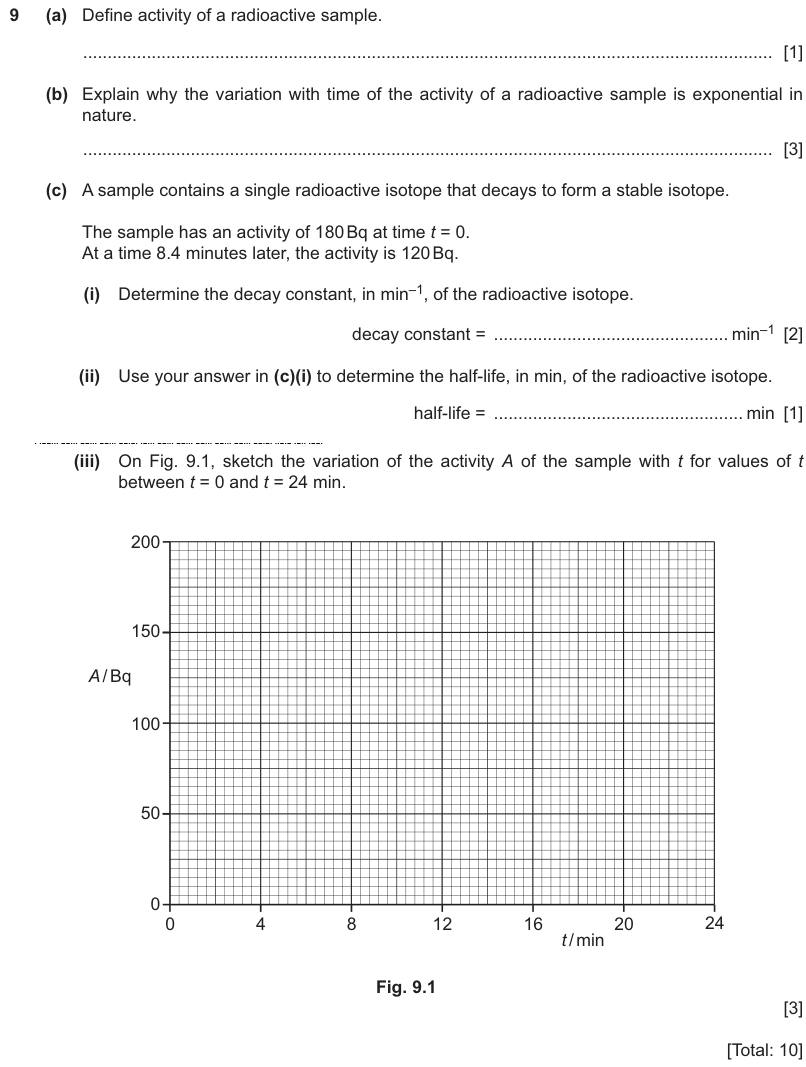
May/June 2025 · Question 9
23.2 Radioactive decay
23.2 Radioactive decay
9702/4310 marks
May/June 2025 · Question 10
25.3 Hubble’s law and the Big Bang theory, 25.2 Stellar radii
25.3 Hubble’s law and the Big Bang theory25.2 Stellar radii